To make the most of your Class Field Trip with the Bermuda National Trust we recommend:
Researching Before You Go:
We’ve created information for each of our properties that offers school visits. See listing below.
Planning Ahead:
- Please contact our Learning Team at education@bnt.bm to discuss your visit; we can tailor interpretive activities to meet your requirements.
- Book well in advance to avoid disappointment by filling in the School Field Trip Booking Form .
- Class teachers are encouraged to make a preparatory visit to the site
- Class teachers are encouraged to review the Field Trip Risk Assessment Form
- A maximum ratio of 10 pupils to 1 adult is recommended. For logistical purposes, large classes may be split into groups
During Your Field Trip:
- On arrival, your class will be met by the our field educator who will lead the programme
- Teachers are responsible for their pupils and their behaviour
- Students do not need to bring any materials but notebooks are suggested
- Students and teachers may take photos on the site
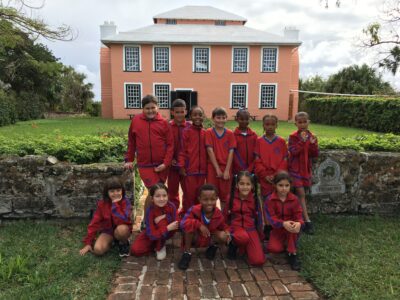 Architecturally, Verdmont is one of the most fascinating old houses in Bermuda built around 1700. Unlike most buildings of its period, its basic structure has remained virtually unchanged for almost 300 years. This historic home features an extensive collection of antiques including Bermuda-made cedar furniture, portraits, English and Chinese porcelain and a child’s nursery. The gardens contain an assortment of herbs, old roses and fruit trees, and the sweeping view of the South Shore is spectacular. Verdmont is part of the African Diaspora Heritage Trail (ADHT).
 Tucker House was the first property acquired by the Historical Monuments Trust in 1939 and it remains one of the most important buildings in the Bermuda National Trust’s possession. It was opened in 1953 by the Monuments Trust largely thanks to Robert Tucker of Baltimore, a distant cousin of President Henry Tucker, who bequeathed his extensive collection of Tucker family furniture to the Monuments Trust when he died at the age of 102. Tucker House is part of the African Diaspora Heritage Trail (ADHT).
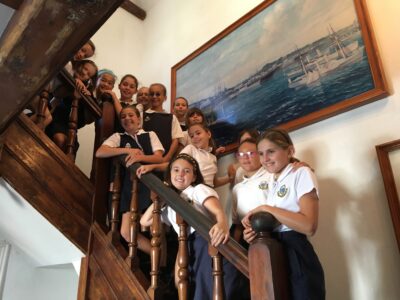 Built by Governor Samuel Day, the Globe Museum dates from c. 1700. It is one of the oldest stone buildings in Bermuda.
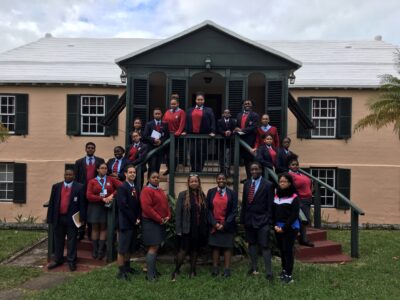 Located on the water’s edge at the end of Hamilton Harbour, known as the Foot of the Lane, Waterville is the headquarters of the Bermuda National Trust. This elegant house was built c. 1747 by the Trimingham family, and was the site of the first Trimingham’s store, which opened in 1842. The reception rooms provide an interesting look into life in early Bermuda. The charming grounds include the Bermuda Rose Society’s showcase garden of old roses and the Mary-Jean Mitchell Green Memorial Garden and Gazebo.
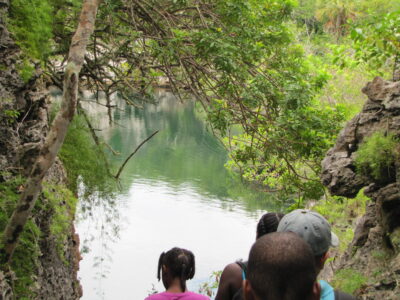 The Hughes Reserve was partly donated by the heirs of Idwal W Hughes in 1992. Located off Harrington Sound Road and lying adjacent to the large private Walsingham Trust, the reserve represents a 1.25-acre addition to the 22 acres of the Walsingham Reserve. Like the larger reserve, it includes Bermuda’s oldest geological formation. Known as the Walsingham formation, it is characterised by extensive pinnacle rocks and cave systems.
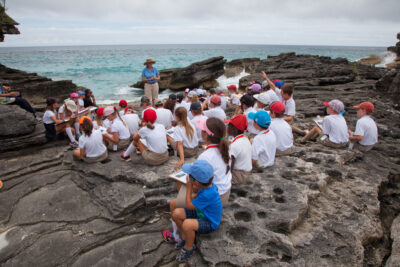 Spittal Pond Nature Reserve includes a variety of Bermuda ecosystems, ranging from pond, upland hillside, rocky coastal to upland coastal hillside. It contains the only salt marsh ecosystem in Bermuda, unique in that it is a spillover marsh flooded by the sea in hurricanes and severe storms. Some 20 bird species regularly winter at Spittal Pond, while a total of 200 species have been recorded as visitors there.
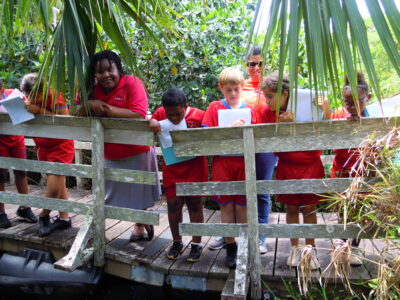 Jointly owned by the Bermuda National Trust and the Bermuda Audubon Society, Paget Marsh is a unique green space of 25 acres of original Bermuda, completely surrounded by homes, shops, roads and the hustle-bustle of our island life. It’s also a walk back in time to life as it was 1,000 years ago. Thanks to creative and careful environmental work, people in Bermuda can see what life was like before there were people in Bermuda! It contains four habitats: ponds, mangroves, sawgrass and a cedar-palmetto forest dating back hundreds of years and representing the landscape first settlers would have experienced.
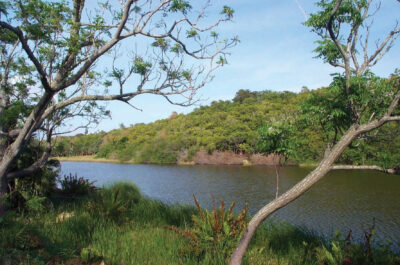 Representing farmland, woodland and the largest freshwater pond in Bermuda, this nature reserve is one of a chain of wetlands from Southampton to Smiths Parish. Sherwin Nature Reserve represents one of the few tracts of natural inland water that has survived and not been used for landfill. The pond is an important sanctuary for bird life, not only for the resident wetland and forest birds but especially for the migratory shorebirds which use the mud flats as they pass through Bermuda in the early fall and a much wider diversity of migratory waterfowl including herons, ducks, coot and grebes which visit Bermuda from North America for the winter.
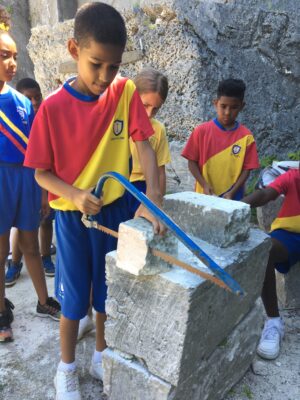 This 8-acre property was donated to Buy Back Bermuda by Sharon Vesey in 2009 and was restored as a nature reserve with public donations to the Buy Back Bermuda Round 2 Campaign. Vesey Nature Reserve was opened to the public on Earth Day, 22nd April 2013.
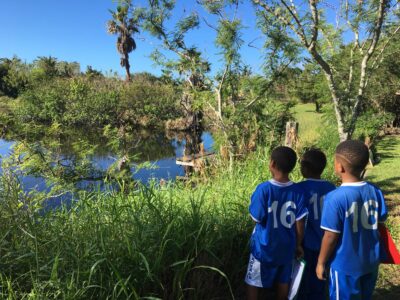 Somerset Long Bay Nature Reserve is a small nature reserve that is ideal for young students to explore. The well maintained grass-covered trails are fun to explore and all year round migratory and resident birds can be viewed from many different viewing points. There is a bird watching hut and a small dock next to the pond.